.png)
 EN
EN VN
VN CN
CN JP
JP KR
KRFrench Cuisine: A Complete Guide to the World's Food Culture
French cuisine is the culinary tradition of France built on codified techniques, a structured multi-course meal format, and regional diversity, and it is the only national cuisine inscribed by UNESCO as an Intangible Cultural Heritage of Humanity, a status granted in 2010. It combines strict technical foundations — established largely by chef Auguste Escoffier in the early 20th century — with distinct regional identities, from the seafood of Brittany to the wine-based dishes of Burgundy.
What Is French Cuisine?
.jpg)
French cuisine is a national culinary tradition defined by codified cooking techniques, a fixed multi-course meal structure, and strong regional identity. It is not one fixed set of recipes but a framework of methods — sauces, cuts, plating logic — that regional and modern chefs apply to local ingredients.
According to UNESCO, the "gastronomic meal of the French" was inscribed in 2010 on the Representative List of the Intangible Cultural Heritage of Humanity, recognizing it as a social practice rather than a single dish or recipe collection. The listing describes it as a customary practice for marking important life events — births, weddings, anniversaries — built around shared, multi-course meals.
Three entities define French cuisine at a glance:
- Technique — the codified methods (sauces, knife cuts, cooking stages) taught in classical French culinary training
- Structure — the fixed sequence of a full French meal (aperitif, starter, main, cheese, dessert)
- Region — the local ingredients and dishes that vary from Provence to Alsace to Brittany
Why Is French Cuisine Recognized as the World's Most Celebrated Food Culture?
French cuisine holds UNESCO Intangible Cultural Heritage status (2010) and forms the technical foundation used in professional kitchens worldwide, including the classical training system, kitchen brigade structure, and sauce codification still taught in culinary schools today.
The Michelin Guide — the global benchmark for fine dining recognition — also originated in France, first published in 1900 by the Michelin tire company. France remains the country with the most Michelin-starred restaurants of any destination the guide covers: the 2025 edition recognized 654 Michelin-starred restaurants nationwide (31 three-star, 81 two-star, 542 one-star), more than any other country, according to the Michelin Guide's own 2025 selection. This scale of formally recognized fine dining is one of the clearest quantifiable markers of the tradition's global standing.
Who Codified Modern French Cuisine?
Chef Auguste Escoffier (1846–1935) is credited with codifying modern French haute cuisine, building on the earlier work of chef Marie-Antoine Carême. Escoffier restructured 19th-century kitchens into the organized "brigade de cuisine" hierarchy still used in professional restaurants today.
His 1903 book, Le Guide Culinaire, compiled roughly 5,000 recipes and formalized what are now known as the five mother sauces — the base sauces from which most classical French sauces are derived. Escoffier's system prioritized discipline, cleanliness, and consistency over the more elaborate, ornamental style of his predecessor, and his codification remains the reference point for classical culinary education worldwide.
What Is the Traditional Structure of a French Meal?
A traditional French gastronomic meal follows a fixed sequence: an apéritif, followed by at least four courses — starter, fish and/or meat with vegetables, cheese, and dessert — closing with liqueurs. This structure is the same one UNESCO cited when inscribing the meal as cultural heritage in 2010.
|
Course |
Position |
Typical Content |
|
Apéritif |
Opening |
Pre-meal drinks, light bites |
|
Starter (Entrée) |
1st course |
Soup, salad, or light dish |
|
Fish and/or Meat |
Main course |
Protein with vegetables |
|
Cheese |
Palate course |
Regional cheese selection |
|
Dessert |
Closing course |
Sweet dish, often pastry-based |
|
Liqueurs |
After dessert |
Digestifs to close the meal |
This structure is designed around pacing and balance rather than volume — each course is portioned to build toward the next, which is part of why the tradition emphasizes shared, unhurried dining.
What Are France's Most Distinctive Regional Cuisines?
France has no single national dish — instead, at least six regions each hold a distinct culinary identity shaped by local geography and climate. Coastal regions favor seafood and dairy, while inland wine regions favor rich, wine-based cooking.
|
Region |
Culinary Identity |
Signature Dishes |
|
Provence |
Mediterranean, olive oil, herbs |
Ratatouille, Bouillabaisse |
|
Burgundy |
Wine-based, rich sauces |
Boeuf Bourguignon, Escargots de Bourgogne |
|
Normandy |
Dairy, apples, seafood |
Moules à la Crème, Camembert cheese |
|
Brittany |
Seafood, buckwheat |
Galette (savory buckwheat crêpe) |
|
Alsace |
German-influenced, hearty |
Choucroute Garnie, Baeckeoffe |
|
Île-de-France (Paris) |
Bistro classics, refined technique |
Duck confit, steak frites, escargots |
What Are the Most Iconic Dishes in French Cuisine?
The dishes most closely associated with French cuisine internationally are Bouillabaisse, Boeuf Bourguignon, Coq au Vin, Ratatouille, and Tarte Tatin — most tied to a specific region of origin and all built on classical technique rather than modern reinterpretation.
- Bouillabaisse — a Provençal fish stew built on Mediterranean seafood and saffron-infused broth
- Boeuf Bourguignon — Burgundy's beef stewed in red wine, a direct application of the region's wine-based cooking tradition
- Coq au Vin — chicken braised in wine, a technique-driven dish rooted in classical French braising
- Ratatouille — a Provençal stewed vegetable dish built on olive oil, tomatoes, and herbs
- Tarte Tatin — an upside-down caramelized apple tart created at the Hôtel Tatin in Lamotte-Beuvron, in the Sologne area of the Loire Valley (Centre-Val de Loire) — a detail worth noting since the dish is often mistakenly linked to Normandy because of its apple base
How Does French Fine Dining Differ From Everyday French Cooking?
Fine dining applies the same codified French techniques — sauce work, precise cuts, structured courses — at a heightened level of execution, presentation, and ingredient sourcing, while everyday French cooking (bistro or home-style) uses the same technical foundation with simpler execution and fewer courses.
Where a home kitchen might serve Boeuf Bourguignon as a single hearty dish, a fine dining kitchen built on the same technique will typically build it into a multi-course tasting menu — extending the classical meal structure (starter, protein, cheese, dessert) into a longer, chef-curated sequence, often paired with wine at each stage. This is the same structural logic UNESCO recognized in 2010, scaled into a formal dining experience.
This same structural logic is what a French Fine Dining restaurant applies when building a tasting menu — the section below looks at one example in Da Nang.
Where Can Travelers Experience French Fine Dining in Da Nang?
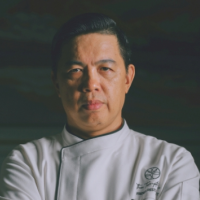
The Temptation Đà Nẵng is a French Fine Dining restaurant in Da Nang built around the same codified technique and course structure described in this guide, led by Chef La Thừa Ân, who trained at the Escoffier culinary school before developing the restaurant's tasting menus.
The restaurant has held Michelin Selected status in the Michelin Guide for 2024, 2025, and 2026, and its head chef received the "Chef of the Year – People's Choice" title at the Gourmet Vietnam Awards 2025, alongside a 2026 nomination for Chef of the Year, Contemporary & Innovative, at Gourmet Vietnam Awards Season 2.
Frequently Asked Questions
Is French cuisine officially recognized by UNESCO?
Yes. The "gastronomic meal of the French" was inscribed on UNESCO's Representative List of the Intangible Cultural Heritage of Humanity in 2010, recognized as a social practice rather than a specific recipe list.
Who is considered the founder of modern French cuisine?
Auguste Escoffier (1846–1935) is most commonly credited, for codifying classical technique, the five mother sauces, and the kitchen brigade system in his 1903 book Le Guide Culinaire.
What is the difference between haute cuisine and regional French cooking?
Haute cuisine refers to the codified, formal technique system (Escoffier's framework), while regional cooking refers to the local dishes and ingredients tied to specific areas like Provence or Alsace — both draw on the same underlying French culinary methods.
Does French cuisine have one national dish?
No. France's culinary identity is regional rather than singular — Provence, Burgundy, Normandy, Brittany, and Alsace each hold distinct signature dishes shaped by local geography.
Is Michelin recognition French in origin?
Yes. The Michelin Guide originated in France, and the country's 2025 guide recognized 654 Michelin-starred restaurants, the clearest single benchmark of French fine dining's global scale.
Experience French Fine Dining in Da Nang
If this guide has you curious about tasting French technique firsthand, The Temptation Đà Nẵng brings the same codified courses and regional French craft covered above to a Fine Dining Da Nang setting — a Michelin Selected tasting menu experience led by Chef La Thừa Ân. For details on courses, pricing, and booking, our menu overview guide covers what to expect before you reserve a table.
Other news
- The Temptation Da Nang Menu: Dishes, Courses & What to Order
- The Temptation Da Nang Wine List: What to Expect from the Sommelier
- Meet La Thừa Ân, the Chef Behind The Temptation Da Nang
- How Do You Book a Table at The Temptation Da Nang? (Online, Phone & Email Options)
- Top 6 Restaurants on Son Tra Peninsula, Da Nang
- How Much Does Fine Dining Cost in Da Nang? A Practical Price & Budget Guide (2026)